
Starting Solids Is About More Than Just Nutrition
Oct 20, 2026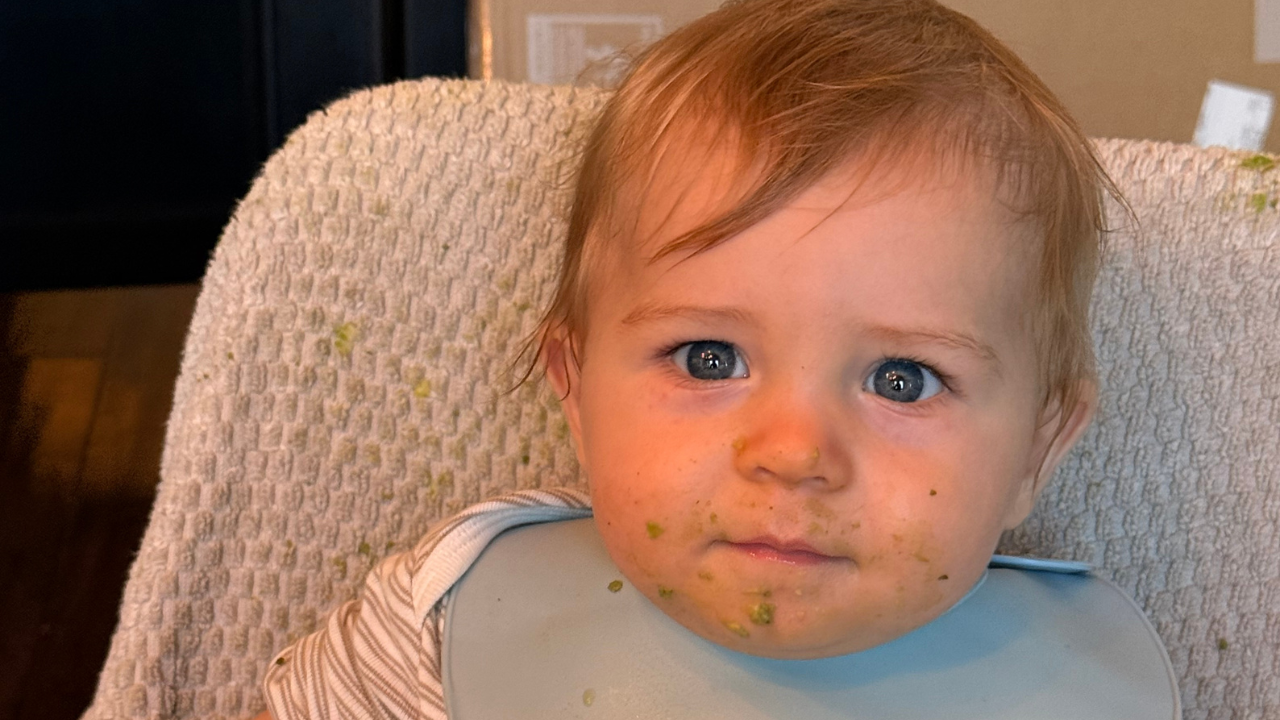
This might ruffle some feathers, but starting solids is about more than nutrition.
We celebrate rolling, sitting, crawling and first steps. But learning to eat solid food rarely gets the same attention, from a developmental standpoint, even though it asks just as much of your baby's body and brain.
Eating takes head and trunk control, a tongue that can move food around and swallow it, coordination between hands and mouth, and a nervous system that can handle a flood of new textures, tastes and temperatures. It's a motor and sensory skill your baby is learning, one bite at a time.
Nourishment matters, and growth matters. But when we see feeding only as "did they eat enough," we miss what's actually developing.
Is your baby ready? Look for the signs, not just the date
Most babies are ready for solids around 6 months. But readiness is about what your baby's body is showing you, not just the date on the calendar. Look for signs in three areas.
1. Body readiness: stability comes first
- Strong head and neck control
- Sitting upright with good trunk control and little or no support
- A steady posture, without slumping or tipping to one side
Stability comes before precision. A baby who is working hard just to stay upright has little energy left for the fine work of chewing and swallowing. A strong trunk gives the jaw a stable base, and a stable jaw lets the tongue move with control.
2. Oral readiness: what's happening in the mouth
- The tongue thrust reflex has faded. In young infants, the tongue automatically pushes anything solid back out. As this reflex fades, food can stay in.
- The tongue moves well. It can move side to side, not just in and out.
- Baby can swallow. They can move food to the back of the mouth and swallow it.
If most of the food keeps coming straight back out, your baby may simply not be ready yet. Waiting a week or two and trying again is completely fine.
3. Interest and engagement
- Watching you eat, and leaning in toward your food
- Reaching for food or your plate
- Grabbing objects and bringing them to their mouth
That hand-to-mouth phase isn't just a cute stage. It's practice for feeding themselves.
Teethers: a warm-up before the first bite
Teethers and mouthing toys are a wonderful way to prepare for solids. They give your baby practice moving their tongue and jaw, exploring different textures and shapes, and coordinating hand to mouth. Mouthing toys may also help the gag response get used to having things in the mouth, before food enters the picture.
Active vs. passive feeding: let them lead
How we feed matters as much as what we feed.
|
Passive feeding |
Active feeding |
|
|---|---|---|
|
Who moves the food |
The adult brings the spoon to baby |
Baby grabs food or a preloaded spoon and brings it to their mouth |
|
Who sets the pace |
The adult |
Baby |
|
What happens at the mouth |
Food is often scraped off on the gums or upper lip |
Baby leans in, opens and closes their lips on the food |
|
What baby practises |
Mostly swallowing |
Reaching, grasping, hand-to-mouth, lip closure, tongue and jaw control |
Active feeding gives your baby control of the movement, and that control is the skill. It isn't about never using a spoon. It's about letting your baby take part rather than just receive.
BLW, purees or both? All of them work
This isn't about choosing a team. Baby-led weaning, purees or a combination can all support your baby's development. What matters most:
- Let baby take part: with their hands, a spoon and their own pace.
- Offer, then wait: hold the spoon in front of them and let them lean in and open, or hand them a preloaded spoon.
- Follow their cues: leaning in and opening means "more." Turning away, closing the mouth or pushing food away means "I'm done" or "I need a break."
Set them up for success
- Seat them upright in a high chair with their feet supported on a footrest.
- Let them touch, squish and explore their food. Mess is learning.
- Offer a range of textures as their skills grow.
- Keep floor time going. Tummy time and free movement build the core strength that feeding depends on.
Gagging is part of learning
Gagging can be scary to watch, but it's a normal and protective part of learning to eat. In babies, the gag reflex sits further forward in the mouth, and it moves back with practice. When your baby gags, they're figuring out how to manage food.
|
Gagging |
Choking |
|
|---|---|---|
|
Sound |
Noisy: coughing, sputtering |
Silent or near-silent |
|
What you see |
Red face, watery eyes, tongue pushing forward |
Can't cough, cry or breathe well; skin may turn bluish |
|
What to do |
Stay calm, stay close and let them work it out |
Act immediately with infant first aid and call 911 |
Taking an infant first aid course before you start solids is one of the best things you can do. It builds your confidence so you can stay calm and let your baby learn.
When to check in with a professional
Trust your gut. Reach out to your healthcare provider or a feeding specialist if your baby:
- Coughs or chokes frequently during meals
- Has meals that regularly end in distress
- Strongly refuses textures over a long period
- Has concerns around weight gain
The bottom line
Your baby's first bites are a milestone. Readiness shows up in the body: head and trunk control, a tongue that can move and swallow, and an interest in food. When you let your baby lead, follow their cues and expect a little mess, you're supporting a sensory and motor skill that will shape how they eat for years.
Want to go deeper? My online course, Born to Move, walks you through your baby's development from birth to first steps, including a full lesson on feeding as a developmental milestone. Click here for more info
Dr. Tanya is a paediatric and family-focused chiropractor with over 22 years of experience, passionate about helping babies thrive in their bodies and their development.
The Motherhood Movement is a Free Community for New Parents!
Get expert advice, simple activities, and uplifting encouragement to help you support your baby's development and feel empowered in your motherhood journey - right into your inbox!
Want my Free Guide for More Information and Support for Your Little One?
Sign up below to receive "10 Simple Activities to Help Boost Your Baby's Development At Home"!
We respect your privacy. By signing up, you agree to receive helpful tips and updates from us. You can unsubscribe at any time, and we’ll never share your information with third parties.
